

Approach
How we work.
We meet a project early, test the three things that decide whether it can be built, and commit money only as the evidence justifies it.
The four stages
What each stage has to produce.
What decides a project
Land, grid and planning.
Three things settle whether a project can be built, and all of them are secured years before construction: control of the land, a connection to the network, and planning approval.
A project can be sound on two of them and dead on the third, so we test all three from the first week and price each one separately. Most of what we do in the first year is finding out, as cheaply as possible, whether a site is real.
Where we work
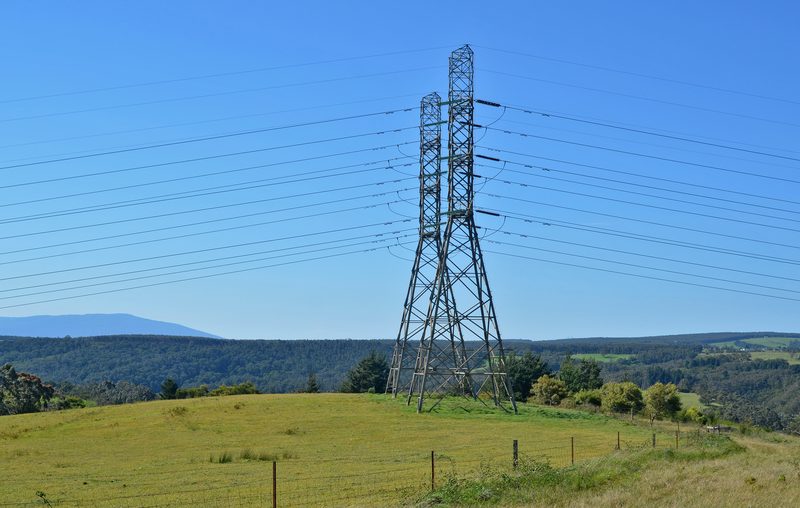
We follow the transmission build.
A corridor with a committed augmentation and a date attached is worth positioning in. A corridor with an announcement and no date is not, and we treat it as something to monitor.
We keep a standing list of areas we will not enter, because network capacity there is already spoken for. Getting that judgement right at the start is worth more than anything we do later.
What we screen for
- Distance to a line or substation with spare capacity
- Network headroom, and the risk of curtailment
- Land control, tenure and title
- Zoning, overlays and environmental constraints
- Terrain, land use and the quality of the landholder position
What development produces
What a project is worth is what has been taken out of it.
Nobody buys a development project for the paperwork. They buy it because a list of things that could have killed it no longer can, and because somebody else paid to find that out. These are the ones that carry the value.
Land control
An option or a lease over the site and the access, with the assignment provisions a buyer needs, executed with the people who own the land. Until that exists there is no project, only a location.
Grid: a connection offer with terms
A connection enquiry lodged, modelling done, and an offer to connect with terms and a date attached. This is the longest and least controllable part of Australian development, and it is where most projects quietly stop.
Planning approval
A determination with conditions somebody has read and costed. Approvals are not equal: one with a condition that cannot be met is worth less than no approval at all, because it has consumed the time as well.
Revenue with a counterparty attached
Offtake, tolling or a merchant case with a counterparty and a term. What converts a permitted site into something a lender will size debt against.
A model and a contract stack that hold up
A financial model built the way a lender builds one, and a contract set whose risk allocation survives diligence. Most of the value destroyed late in development is destroyed here, by work done early that does not stand up.
Market
New build has fallen to one of its lowest levels in a decade.
Just 2.3 gigawatts of new renewable generation reached financial close in Australia in 2025, down 46 per cent on the year before, while renewables supplied 42.7 per cent of electricity. The shortage is in projects that have cleared land, grid and planning, and that is the part we do.
Source: Clean Energy Council, Clean Energy Australia 2026.
Talk to us about a project
If you are holding something early, we will tell you quickly whether it is worth pursuing.